How Funding Rates Affect Perpetual Futures

How Funding Rates Affect Perpetual Futures

Funding rates in perpetual futures function as recurrent payments between long and short holders, aligning contract prices with the underlying index. They reflect market imbalance, leverage, and risk sentiment, not a fixed cost. The formula, intervals, and changes yield transparent…

How Foundations Support Crypto Networks

How Foundations Support Crypto Networks

Foundations shape crypto networks through governance, funding, standards, and risk oversight. They provide transparent stewardship, align incentives, and enable independent impact evaluation. Structured grants and catalytic investments accelerate milestones and nurture talent, while strategic stakes support ecosystem maturation. Interoperable standards…

What Are Layer 1 Blockchains?

What Are Layer 1 Blockchains?

Layer 1 blockchains are the base networks that secure and order on-chain activity. They provide consensus, data availability, and finality for transactions and smart contracts. Design choices—such as the consensus mechanism, governance, and upgrade paths—determine throughput, latency, and resilience. These…

What Are Governance Tokens?

What Are Governance Tokens?

Governance tokens are digital assets that grant holders influence over a project’s policy decisions. They translate ownership into votes, often weighting power by balance, stake duration, or delegation. Systems may be proportional, quadratic, or otherwise designed to modulate influence. These…

How AI Helps Predict Real Estate Prices

How AI Helps Predict Real Estate Prices

AI-driven pricing combines transaction data, neighborhood demographics, and amenity access to quantify real estate value drivers. Models weigh features, capture interactions and non-linear effects, and emphasize data quality and transparency. Robust workflows ensure clean data and reproducible forecasts aligned with…

How AI Helps Prevent Sports Injuries

How AI Helps Prevent Sports Injuries

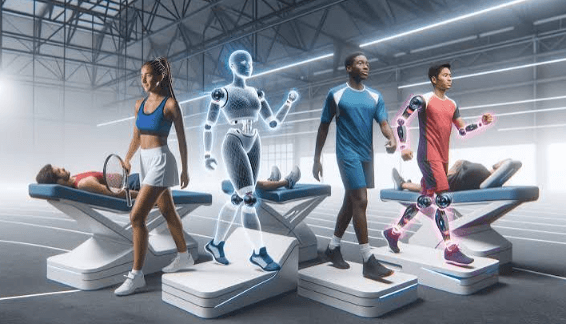
AI augments injury prevention by integrating biomechanical data, wearable outputs, and contextual signals to identify patterns that precede injuries. It enables real-time monitoring of fatigue, form, and load, supporting on-the-spot adjustments and informed training plans. Personalization at scale yields tailored…