
Newsletter Subscribe
Enter your email address below and subscribe to our newsletter

 ByJohn A
AI augments injury prevention by integrating biomechanical data, wearable outputs, and contextual signals to identify patterns that precede injuries. It enables real-time monitoring of fatigue, form, and load, supporting on-the-spot adjustments and informed training plans. Personalization at scale yields tailored risk profiles and proactive strategies, underpinned by governance, validation, and privacy safeguards. Yet implementing these systems safely requires careful integration with existing practices; the practical implications and limits invite further examination.
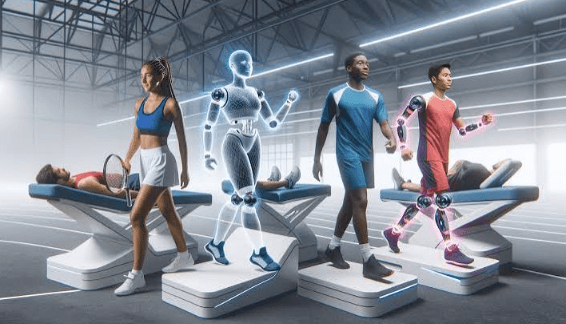
AI enhances injury risk detection by integrating biomechanical data, wearable sensor outputs, and contextual information to identify patterns preceding injuries.
The approach emphasizes data quality as a foundational asset and acknowledges model bias as a systemic concern requiring rigorous validation, diverse datasets, and transparent reporting.
This disciplined methodology supports robust, reproducible risk assessments while preserving practitioner autonomy and evidence-based discernment.
Real-time monitoring translates biomechanical form and physiological state into immediate, actionable fatigue indicators, enabling on-the-spot adjustments to movement patterns and training loads.
Data captured by sensors informs alert thresholds and recovery timing, while rigorous sensor calibration ensures reliability.
Data privacy considerations safeguard athlete information, supporting compliant data use without impeding insight; continuous validation underpins trustworthy, real-time decision making.
See also: novatechbeaconcom
Personalization at scale enables tailored injury-prevention plans by integrating multi-source data—biomechanical, physiological, and contextual—across large athlete cohorts. Tailored risk profiles guide prevention coaching, enabling precise, proactive strategies. Digital dashboards support scalable decision-making, while contextualized feedback refines plans.
| Factor | Action |
| Biomechanics | Monitor form adjustments |
| Physiology | Track load responses |
Implementation and limitations arise from the need to balance data-driven insight with rigorous safety, governance, and ethical considerations across athletic environments.
AI deployment requires transparent validation, ongoing monitoring, and clear accountability.
Privacy audits and data governance frameworks ensure consent, minimalism, and scope control.
Safeguards address bias, interoperability, and incident response, while stakeholders converge on shared standards to sustain trusted, responsible athletic innovation.
AI reliability for individual athletes varies; outcomes depend on data quality and individual variability. Extra factors include data privacy, deployment costs, tool adoption, expert coaching, and risk of new or rare injuries guiding cautious, evidence-based decision making.
Data minimization and consent governance protect athlete information by limiting collected data to essential elements and clearly documenting permissions. This expert approach reduces risk, maintains autonomy, and supports transparent governance, enabling informed participation while preserving individual freedom and trust.
AI recommendations cannot fully replace expert coaching judgments; they supplement with data-driven insights, yet AI bias and data gaps threaten nuanced decisions and contextual fitness, demanding human oversight for individualized, adaptable athlete development and safety.
AI handles new or rare injuries by leveraging AI driven data ethics to safeguard data while updating transferable injury models through adaptive learning, ensuring robust inference; conclusions emphasize transparent validation, cautious deployment, and continuous expert oversight for freedom-loving practitioners.
The cost of AI deployment varies, with ROI considerations, data privacy safeguards, sensor hardware costs, analytics infrastructure, model maintenance, and regulatory compliance shaping budgeting; implementation timelines, scalability challenges, interoperability, vendor lock-in, and training requirements influence user adoption and real-time processing.
AI-enabled injury prevention integrates biomechanical data, wearable outputs, and context to detect predisposing patterns and guide proactive interventions. Real-time monitoring translates form and fatigue signals into actionable adjustments, while personalized risk profiles enable scalable, tailored plans. Despite concerns about data privacy and bias, rigorous validation, transparent governance, and interoperable frameworks ensure trustworthy deployment. By addressing these limits, AI sustains safety benefits without sacrificing privacy or equity, delivering precise, evidence-based prevention that adapts to individual and sport-specific needs.


[…] See also: How AI Helps Prevent Sports Injuries […]